Crop Yield Prediction
Sri Lanka’s farmers face increasing uncertainty from shifting weather, rising costs, and climate change. Accurate, timely crop yield prediction is essential for:
Ensuring food security.
Planning subsidies and resource allocation.
Managing loans, insurance, and market supply chains.
Supporting exporters with reliable crop forecasts.
The WHY Super App Yield Prediction Solution uses satellite data + machine learning models to provide field- and regional-level yield estimates. Whether it’s a smallholder’s paddy field or a provincial tea estate, the system helps everyone, from farmers to ministries — make better decisions.

Approach and Methodology
Statistical yield prediction model
- Relies on historical dataset, primarily on past yield data.
- Trained on historical data and predicts current-season yields by combining past trends with present parameters.
Biophysical yield prediction model
- Relies on the physical crop parameters and its phenological characteristics (variety, growth stages, water demand, etc.).
- Can predict yield for a specific date without historical data and can be applied repeatedly throughout the season.
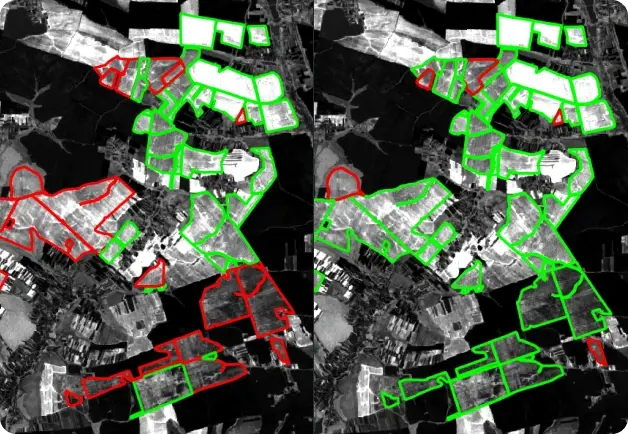
Methodology
90 % Accuracy
1. Statistical Model.
Collects past yield, weather, soil, and satellite data.
Trains ML models (Linear Regression, Random Forest, XGBoost).
Predicts current-season yield by combining past trends with present conditions.
2. Biophysical Model.
Uses phenological data (growth stages, crop characteristics).
Simulates biological productivity (total biomass, water use, soil moisture, evapotranspiration).
Updates forecasts every 2 weeks with new weather/soil inputs.
90%